
Introduction
Hydraulic tube clamps are critical for secure routing of pipes in industrial systems. Innovations in clamp design – such as multi-layer (stacked) clamps, twin/parallel clamp kits, and quick-release features – allow bundling multiple tubes and reducing vibration.
Modern clamps use advanced materials (reinforced polyamide, high-grade stainless steel, aluminum, rubber linings) to withstand extreme temperatures and corrosive environments.
Integration with smart sensors (IoT) and adoption of 3D-printing for custom parts are emerging trends. Proper clamp selection (size, pressure rating, material per DIN 3015), installation alignment, and periodic inspection (to prevent leaks and fatigue) are essential for safety and reliability.
This article explores the latest multi-tube clamp solutions, material choices, and installation tips to guide engineers in optimizing hydraulic tube clamping systems.
Tube Clamps in Industrial Systems
Hydraulic tube clamps (also called pipe clamps) are fastening devices used to secure fluid lines (hydraulic, pneumatic, chemical) to structures. They prevent hoses or tubes from vibrating or chafing and ensure leak-free connections. Standard industrial clamps follow DIN 3015 (parts 1–3) for dimensions and series (light, heavy, twin, etc.).
A key feature of modern tube clamps is vibration and impact resistance: engineered ribs and damper elements in the clamp body absorb shocks, reducing resonance in the pipe axis. Multi-layer (stacked) and twin-series clamps allow grouping several tubes in one assembly, saving space and simplifying installations.
For example, a “twin” clamp kit can hold two parallel tubes while maintaining a fixed center distance and dampening vibration.
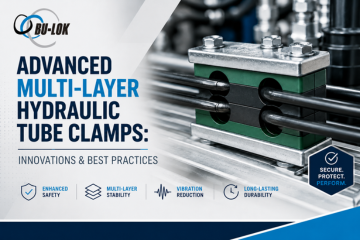
Example of a heavy-duty hydraulic tube clamp (green polymer jaws with zinc-coated plates) used for vibration damping and secure support of high-pressure lines. Modern clamps come in stacked or twin configurations to bundle multiple pipes.
Innovations in Clamp Design
Recent industry trends focus on flexible, space-saving clamp systems.
Multi-layer Tube Clamps: Stacked (multi-layer) clamps use interlocking plates and stacking bolts, enabling two or more clamp bodies to mount on a single rail or plate. This effectively bundles multiple lines (2, 3, or 4 layers) into one clamped unit.
These systems (commonly DIN 3015-3 “Twin Series” or custom kits) support heavy hydraulic manifolds with tight center spacing, reducing clutter in mobile and stationary machinery.
Adjustable/Modular Clamps: Some advanced designs include adjustable-diameter clamps and quick-release bolts that allow on-the-fly size change or rapid removal for maintenance.
Vibration-Damping Features: Rubber or elastomer linings inside clamps (cushion clamps) minimize noise and wear. Floating or cushioned clamps prevent direct metal-to-metal contact, further reducing vibration transmission.
Stacked multi-layer hydraulic tube clamps (green and metallic plates): It can secure multiple parallel pipes on one mounting rail. These clamps use polymer or metal jaws with zinc-coated bolts for corrosion resistance and high pressure ratings.
Advanced Materials and Durability
Choosing the right clamp material is crucial for durability. DIN 3015 specifies clamp body materials like polypropylene (PP), polyamide (PA), rubber (elastomers), and aluminum, with metal accessories in steel or stainless steel.
Polypropylene (PP): The most common material, PP offers good strength, oil/chemical resistance, and operating range −30°C to +90°C. UV-stabilized PP (often colored blue or green) is ideal for outdoor use.
Polyamide (PA): Glass-fiber reinforced PA66 is used in heavy-duty or fire-sensitive environments. PA provides high mechanical resistance (−40°C to +140°C) and self-extinguishing grades (UL94 V-0) for indoor industrial use. Unreinforced PA6 (black) is also offered for lighter-duty clamps with higher strength than PP.
Aluminum: EN46100 die-cast aluminum clamps are used for extreme temperatures and ATEX compliance. Aluminum maintains strength at very low (<−40°C) or high (>140°C, up to 300°C) temperatures and is conductive (needed in explosive environments).
Elastomers/Rubber: TPE or rubber inserts reduce vibration and noise. Stainless steel (SS 304/316) bolts and plates with trivalent zinc or natural finishes prevent corrosion.
In short, materials are selected based on environment: stainless steel clamps for corrosive/oceanic settings, PA for flame resistance, etc. Routine maintenance must check for corrosion or crack formation, especially in harsh applications.
Mounting, Standards and Installation
Proper installation maximizes clamp performance. Most tube clamps mount on standardized rails (e.g. TS-11, TS-14 per DIN 3015) or fixed plates with nuts. The TS-11 “rail channel” (stamped steel, zinc-plated or stainless) provides an adjustable mounting strip: clamps slide on the rail and are secured by rail-nuts. This allows easy repositioning of clamp positions.
Key installation tips include: Alignment: Always ensure pipes are straight and aligned before tightening clamps. Misalignment is a common cause of leaks or fatigue failure.
Torque: Use calibrated torque tools to avoid under- or over-tightening. Over-tightening can deform or crack tubes (especially soft materials).
Spacing: Follow spacing guidelines to control vibration – clamps should be spaced closely (typically every 2-4 feet) for stiff tubes; multi-layer clamps can cluster tubes closely for compact routes.
Pressure Rating: Ensure clamp series matches operating pressure: heavy series clamps (with larger bolts and plates) are rated for higher pressures (up to 6000–10000 psi).
Standards Compliance: Verify clamps meet relevant standards (DIN 3015 for dimensions, UL94 or EN45545 for fire ratings if needed). Using DIN-specified clamps ensures compatibility with other brands (Stauff, Parker) and predictable performance.
Example of a multi-clamp assembly (blue clamp bodies) holding two parallel high-pressure tubes. Such twin-series or multi-layer clamps provide shock absorption and compact routing; installation uses rail nuts on a TS-11 mounting channel for adjustable positioning.
Emerging Trends: Smart and Sustainable Clamps
Beyond traditional designs, “smart” clamps and sustainable materials are gaining attention.
IoT-Enabled Clamps: Innovative companies are integrating mini-sensors into clamps to monitor pressure, temperature, or vibration in real-time. These smart clamps can alert maintenance teams to pipe stress or imminent failure (predictive maintenance), a trend particularly useful in critical facilities (chemical plants, refineries).
Additive Manufacturing: 3D-printed clamp adapters and fittings (using high-performance polymers like Onyx with carbon fiber) can be produced on-demand, reducing lead times and weight. This allows customized clamp parts when standard sizes don’t fit complex systems.
Eco-Friendly Materials: Manufacturers are exploring recycled plastics and eco-friendly coatings. For example, some use recycled PP or bio-based polymers for clamp bodies, and advanced zinc coatings (trivalent) for corrosion resistance. Such measures reduce environmental impact in alignment with industry sustainability goals.
In summary, combining tried-and-true clamp mechanics with digital monitoring and green materials represents a micro-niche of ongoing innovation.
Selecting the Right Clamp
When choosing a hydraulic tube clamp, consider the application and environment. Key factors include:
– Pipe Size & Series: Select clamp series (standard/light, heavy, twin) that covers the tube outer diameter (OD). For multiple lines, choose multi-layer or twin clamps.
– Material & Coating: Match clamp body material to conditions (e.g., PP for general use; PA66 for heat/fire; aluminum for extreme cold/ATEX; rubber-lined for vibration). Use stainless steel hardware if corrosion is a concern.
– Pressure & Load Rating: Heavy series clamps with larger bolts are needed for high-pressure systems or heavy lines. Verify working pressure (PSI/bar) rating on data sheets.
– Standards & Certification: Prefer clamps certified to DIN 3015 and material standards (UL94, EN45545 for fire safety, etc.) to ensure safety and interoperability.
– Installation Requirements: Determine if mounting rails (TS-11) or custom brackets are needed. For quick maintenance, consider clamps with captive bolts or spring latches.
– Budget & Lead Time: Standard PP clamps are cost-effective for large quantities, whereas specialty clamps (e.g. SS or self-extinguishing types) cost more but provide longevity in harsh conditions.
Best Practices and Maintenance Tips
– Proper Mounting: Use the recommended number of rail-nuts or weld-in plates. Double-check that clamps sit flush against the pipe and rail to avoid canting.
– Alignment Checks: Before final torquing, visually inspect that each tube is straight between clamps. Misaligned pipes should be re-positioned.
– Even Tightening: Tighten bolts incrementally and evenly. For stacked clamps, ensure all plates clamp down without gaps.
– Inspection Schedule: Periodically inspect clamps for cracks, bolt corrosion, or loosening. Vibration can loosen clamps over time, so maintenance checks (e.g., every 6–12 months) prevent failures.
– Replacement Parts: Keep spare clamp inserts and bolts on hand. Damaged jaws or bolts can often be replaced individually instead of full clamp replacement.
– Safety Margin: When in doubt, choose the heavier duty option. A clamp rated above the expected load provides extra safety (many system failures trace back to overloaded fasteners).
By following these guidelines and leveraging advanced clamp designs, engineers can optimize fluid system layouts for safety, performance, and longevity.