When engineers specify a tube clamp, most of the attention goes to size and series – the outer diameter, the light-versus-heavy decision. But there is a third choice that quietly decides how the clamp performs for the next ten years: the body material.
Pick the wrong one and a clamp that looked fine on day one can soften in the heat, crack in the cold, swell in water or fail a fire inspection. Pick the right one and it simply does its job and is forgotten.
The three standard clamp body materials – polypropylene, polyamide and aluminum – each have a clear home. Here is how to choose between them.
Polypropylene (PP) – The Default Choice
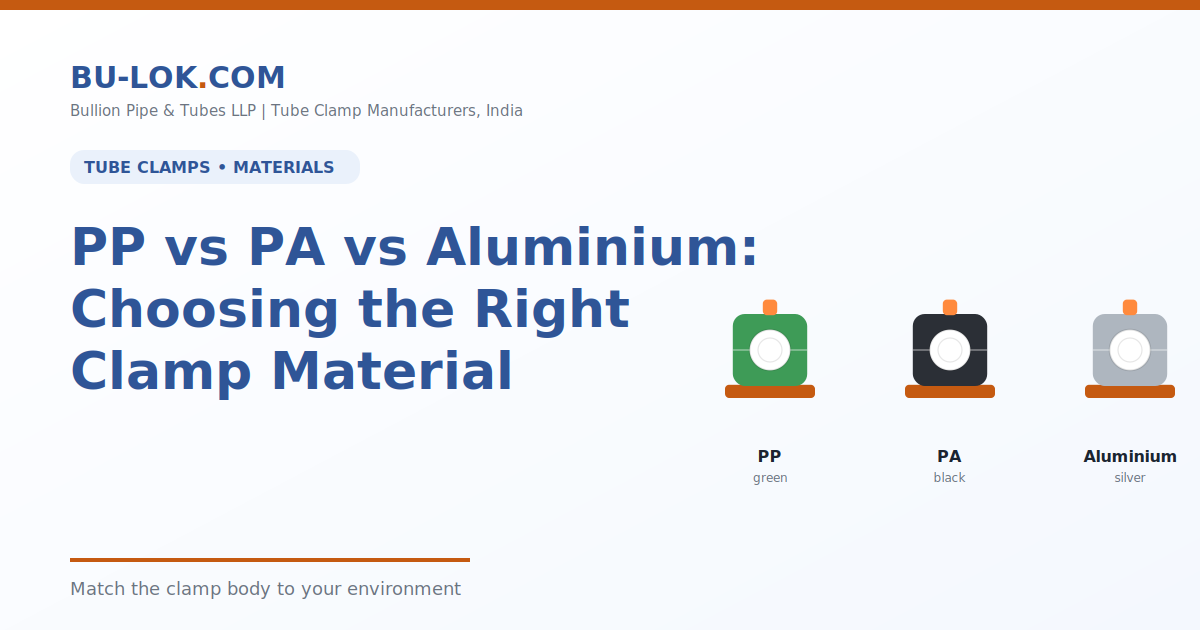
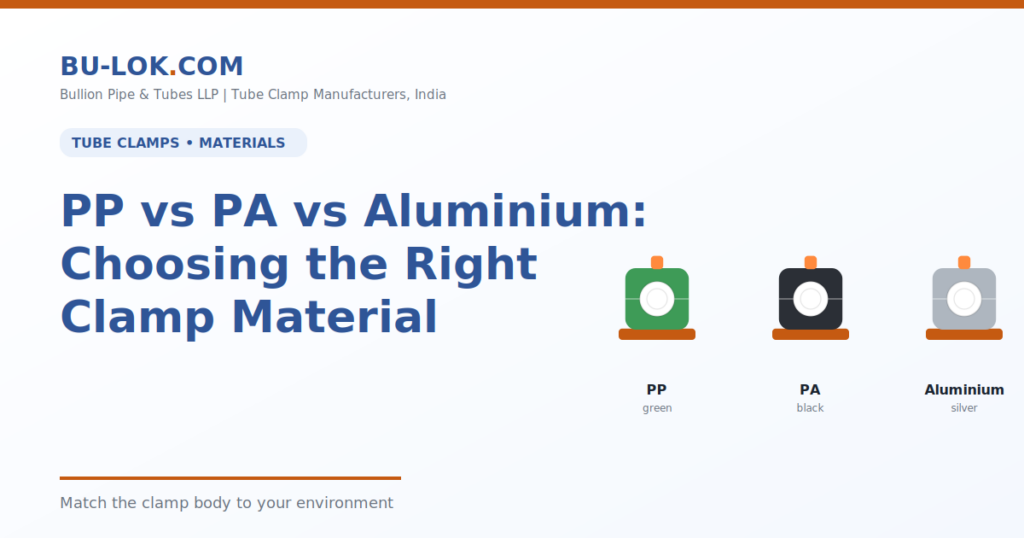
Polypropylene, identifiable by its green color, is the standard body material for good reason. It resists a broad range of oils, fuels and chemicals, damps vibration well and offers the best value for high-volume projects.
For the majority of general piping – indoor hydraulic, lubrication and instrumentation lines in moderate temperatures – PP is all you need, and specifying anything more exotic just adds cost.
Its limits are temperature and UV exposure. Standard polypropylene is happiest in a moderate temperature band and is not the first choice for permanent outdoor sun exposure or high-heat zones. When your application stays within ordinary conditions, though, PP is the sensible, economical default.
Polyamide (PA / Nylon) – The Tougher Upgrade
Polyamide, recognizable by its black color, is the material to step up to when the demands rise. It handles higher temperatures and higher mechanical stress than polypropylene, resists impact and abrasion better, and offers notably better UV stability – which makes it the preferred body for outdoor and mobile-machinery duty.
It also copes better with long-term contact with mineral oils, the lifeblood of hydraulic systems.
Polyamide has one quirk worth knowing: it can absorb moisture over time, and permanent immersion in water can gradually affect its mechanical properties.
So PA is the right pick for hot, high-stress, outdoor and abrasive environments – think agricultural equipment, mobile machinery and demanding plant floors – but for constant water contact you would weigh it against other options.
Aluminum – The Fire-Safe Specialist
Aluminum clamp bodies, with their natural silver finish, exist for the jobs plastic simply cannot do. Aluminum is non-combustible and electrically conductive, and it withstands far higher temperatures than any thermoplastic.
That makes it mandatory in fire-safety-critical zones and high-temperature areas – offshore decks, engine bays and any location where a plastic clamp is not permitted by the specification.
Aluminum is a specialist, not a default. You choose it because a code, a client spec or a genuine fire or heat risk requires it – and in those situations, nothing else will pass.
Side-by-Side at a Glance
| Material | Best Suited To |
| Polypropylene (PP) – green | General indoor hydraulic, lube and instrumentation lines; best value, moderate temperatures |
| Polyamide (PA / nylon) – black | Higher temperature, higher impact, UV and outdoor exposure, mobile and agricultural machinery |
| Aluminum – silver | Fire-safe, conductive and high-temperature zones; offshore decks and engine bays where plastic is not allowed |
Don’t Forget the Hardware
The body material is only part of the specification. The cover plate, weld plate and bolt matter just as much in a corrosive setting. Zinc-coated mild steel is fine for standard environments, but for marine, offshore, chemical and washdown duty you should pair the body with stainless steel 304 or 316 hardware – otherwise the clamp body outlasts the very bolts holding it together.
Specify It Right With Expert Help
Choosing a clamp body comes down to matching the material to temperature, chemicals, fire risk and load – and then pairing it with the right hardware for the environment. Bullion Pipe & Tubes LLP offers all three body materials across the full DIN 3015 range, with zinc-plated and stainless 304/316 hardware options, so you can match the clamp precisely to your application.
Tell us your operating conditions and we will recommend the right combination. Contact our team for a specification and a quote.