
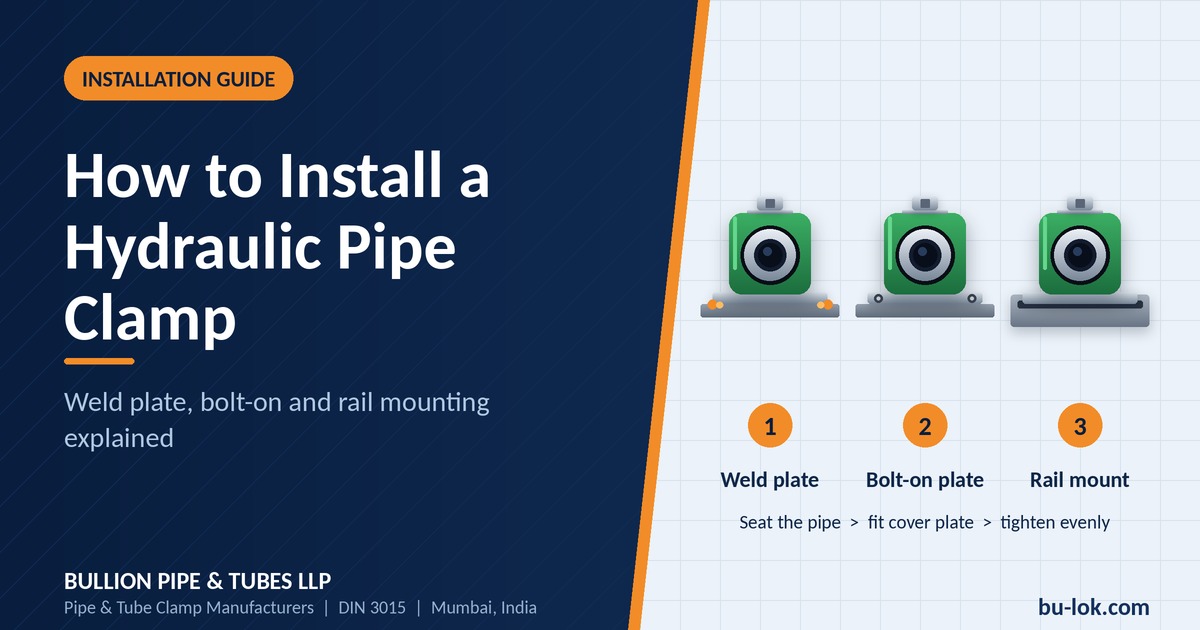
To install a hydraulic pipe clamp, fix the base plate to the structure, seat the pipe between the two clamp halves, fit the cover plate and tighten the hex bolt until the jaws grip the full circumference without crushing the pipe. The method depends on your structure: weld plate, bolt-on plate or rail.
Before You Start: Confirm Four Things
- Pipe outer diameter.Measure the OD, not the bore. A clamp that is even slightly oversized will let the pipe vibrate.
- Clamp series.Light series (DIN 3015 Part 1) suits low-to-medium pressure lines. Heavy series (Part 2) suits high pressure and large pipes. Twin series (Part 3) holds two pipes in one body.
- Clamp material.Polypropylene, polyamide or aluminum body, with zinc-coated or stainless steel hardware.
- Mounting method.Weld plate, bolt-on plate or rail, depending on whether the structure can be drilled or welded.
Parts of a Hydraulic Pipe Clamp
- Two clamp halves (jaws or shells)
- Weld plate or mounting plate
- Cover plate
- Hex bolt
Method 1: Weld Plate Installation
Use this on steel frames and skids where welding is allowed.
- Mark the clamp positions along the pipe run.
- Position the weld plate and tack-weld it in place.
- Check alignment with the pipe, then complete the weld.
- Let the weld cool and clean off any spatter before fitting the clamp.
- Place the lower clamp half on the plate and seat the pipe in it.
- Fit the upper half and cover plate, then tighten the hex bolt evenly.
Do not weld with the plastic clamp halves fitted. Heat will damage the body.
Method 2: Bolt-On Plate Installation
Use this where the structure cannot be welded, such as panels, machine frames and finished equipment.
- Mark and drill the mounting holes to suit the plate.
- Fix the plate with suitable fasteners.
- Seat the pipe, fit the clamp halves and cover plate, and tighten the hex bolt.
Method 3: Rail Mounting
Mounting rail and DIN rail channels give a weld-free, bolt-on system for fast, repeatable installation. They suit machine tools, automation and panel building. Clamps slide into the rail and lock in position, so spacing can be adjusted without drilling again.
Multilayer Installation
Multilayer or stacking clamps hold several pipe rows on a single rail. Stacking bolts and plates build the rows vertically. Use them where space is tight and several lines run in parallel.
Tightening the Hex Bolt Correctly
- Tighten evenly.The jaws should grip the full circumference.
- Do not overtighten.Excess force can deform a plastic body or distort a thin-wall tube.
- Check the grip.The pipe should not rotate or slide by hand, but it should not be crushed.
- Follow the torque guidancefor your clamp size and series from the manufacturer’s datasheet.
Common Installation Mistakes
- Wrong spacing.Too few clamps allow sag and resonance.
- Oversized clamp.The pipe vibrates inside the jaws.
- Mixing clamp families.Use halves, plates and bolts that belong to the same series.
- Wrong hardware for the environment.Use stainless steel 304 or 316 hardware for marine, offshore, chemical and washdown areas.
Quick Installation Checklist
- Tube OD confirmed
- Series and material matched to the application
- Mounting method chosen
- Plate fixed and aligned
- Pipe seated in both clamp halves
- Hex bolt tightened evenly
- Clamp positions checked along the run
Hydraulic Pipe Clamps From Bullion Pipe & Tubes LLP
Our DIN 3015 hydraulic pipe clamps cover 6 mm to 219 mm OD, with locking screws from M6 to M30 and working pressure up to 6000 PSI (about 420 bar) depending on the series. They are dimensionally interchangeable with STAUFF, Parker and Swagelok clamps, so you can replace imported clamps without changing your layout. For stacked rows, see our multilayer pipe clamps.
Frequently Asked Questions
How do you install a hydraulic pipe clamp?
Fix the weld or mounting plate to the structure, seat the pipe between the clamp halves, fit the cover plate and tighten the hex bolt evenly.
Do I need to weld a pipe clamp?
No. Weld plates suit steel structures. Bolt-on plates and rail systems give weld-free installation.
How tight should a pipe clamp be?
Tight enough that the jaws grip the full circumference and the pipe cannot slide, but not so tight that the clamp body or pipe deforms.
What size clamp do I need for my pipe?
Match the clamp to the tube’s outer diameter in mm or inches. Do not size to the bore.
Need clamps, plates and rails supplied together? Send us your pipe schedule for a complete quotation.